Subtracting Scientific Notation, What Is Y? Mystery Picture Worksheet P0017
Subtracting Scientific Notation, What Is Y? Mystery Picture Worksheet P0017
Couldn't load pickup availability
Turn skill practice into an engaging summer-themed Pixel Art Math activity with Subtracting Scientific Notation, What Is Y? Mystery Picture Worksheet P0017. This self-checking Google Sheets resource combines practice with a mystery picture reveal, giving students instant feedback while keeping them motivated to complete each problem.
As students answer correctly, pieces of a hidden summer-themed pixel art image appear on the screen. The interactive format adds curiosity and excitement to regular practice while reinforcing important Subtracting Scientific Notation, What is y? skills through meaningful repetition.
With no printing, cutting, or grading required, this activity is easy to assign and simple for students to use. It works well for math centers, independent practice, review, test prep, early finishers, morning work, sub plans, homework, and seasonal summer lessons.
If you are looking for a self-checking digital math activity that combines practice, instant feedback, and a fun seasonal reward, Subtracting Scientific Notation, What Is Y? Mystery Picture Worksheet P0017 makes review feel more like a puzzle than a worksheet.
☀️ Key Features
- Interactive Pixel Art Reveal — Each correct answer reveals part of a hidden summer-themed mystery picture.
- Self-Checking Google Sheets — Students receive immediate feedback so they can correct mistakes as they work.
- No Prep Required — Assign digitally through Google Classroom or your preferred learning platform.
- Easy Independent Practice — Students can work at their own pace with minimal teacher assistance.
- Flexible Classroom Use — Great for centers, review, homework, early finishers, sub plans, or remote learning.
- Seasonal Summer Theme — Bright summer mystery pictures add a fun seasonal twist to skill practice.
⭐ Why Teachers Love It
- “My students love pixel art activities—they race to finish just to see the picture.”
- “Perfect for early finishers and sub plans—super engaging and easy to assign.”
- “These are super easy to assign through Google Classroom.”
- “Great for my ELs and students with IEPs—accessible, fun, and self-paced.”
- “I’ll use this resource again and again—it saves me time and keeps students on task!”
🎯 Benefits for Your Classroom
✅ Boosts Engagement — Turns skill practice into an interactive mystery picture students want to complete.
✅ Provides Instant Feedback — Self-checking problems help students recognize and correct mistakes right away.
✅ Saves Teacher Time — No printing and minimal grading or preparation required.
✅ Supports Differentiation — Students work independently and at their own pace.
✅ Reinforces Key Skills — Provides focused practice with important math concepts.
📦 What’s Included
- 5 Interactive Google Sheets Pixel Art Activities
- 5 Summer-Themed Mystery Pictures
- 100 Self-Checking Practice Problems
- Answer Keys for Quick Reference
❓ Sample Questions
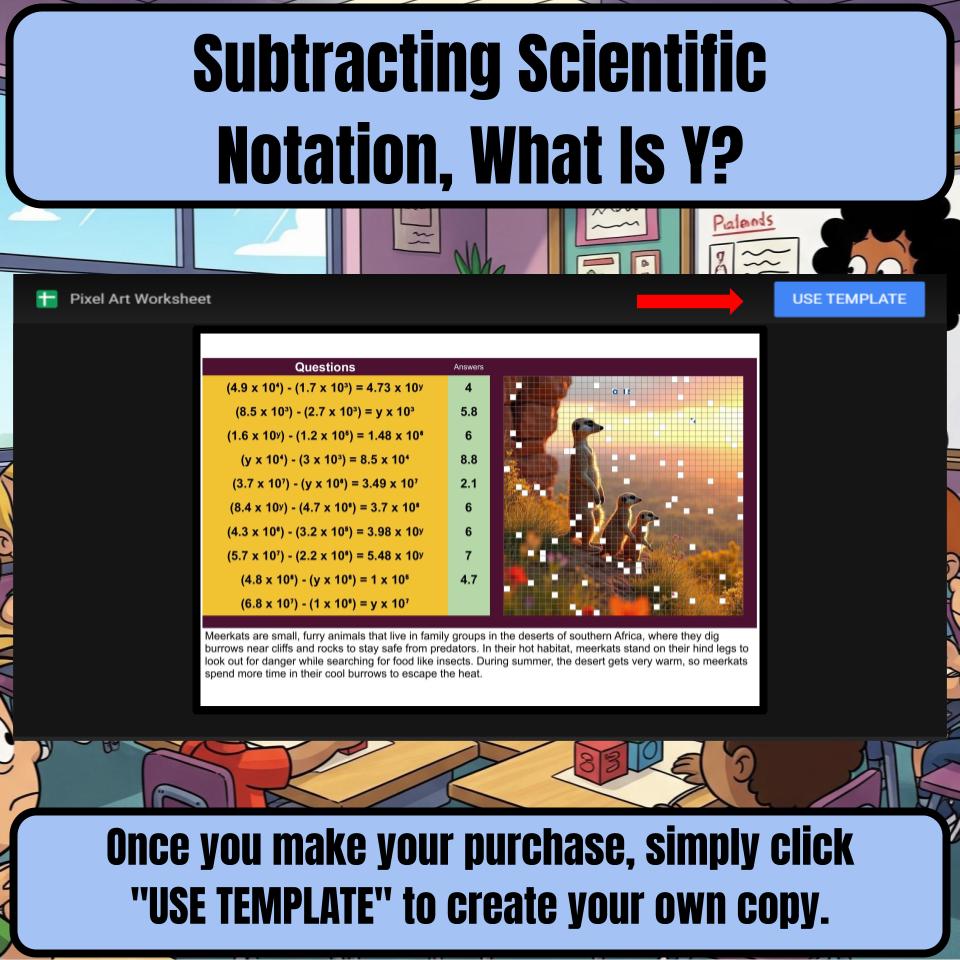
(8.5 x 10³) - (2.7 x 10³) = y x 10³ Ans: 5.8
(1.6 x 10ʸ) - (1.2 x 10⁵) = 1.48 x 10⁶ Ans: 6
(y x 10⁴) - (3 x 10³) = 8.5 x 10⁴ Ans: 8.8
(3.7 x 10⁷) - (y x 10⁶) = 3.49 x 10⁷ Ans: 2.1
(8.4 x 10ʸ) - (4.7 x 10⁶) = 3.7 x 10⁶ Ans: 6
(4.3 x 10⁶) - (3.2 x 10⁵) = 3.98 x 10ʸ Ans: 6
(5.7 x 10⁷) - (2.2 x 10⁶) = 5.48 x 10ʸ Ans: 7
(4.8 x 10⁶) - (y x 10⁶) = 1 x 10⁵ Ans: 4.7
(6.8 x 10⁷) - (1 x 10⁶) = y x 10⁷ Ans: 6.7
(1.3 x 10³) - (y x 10²) = 1.2 x 10³ Ans: 1
🧩 Puzzle Snippets
- Meerkats are small, furry animals that live in family groups in the deserts of southern Africa, where they dig burrows near cliffs and rocks to stay safe from predators. In their hot habitat, meerkats stand on their hind legs to look out for danger while searching for food like insects. During summer, the desert gets very warm, so meerkats spend more time in their cool burrows to escape the heat.
- Baby antelope are young animals with long legs and horns that help them run fast from predators. They live in grassy valleys where they eat plants and stay alert for danger. In the summer, their valley habitat gets warmer and sunnier, so the baby antelope play more but also rest in shady spots to stay cool.
- Koalas are furry animals from Australia that live in eucalyptus forests, sometimes in open clearings where they can climb trees and rest. They eat eucalyptus leaves and sleep for most of the day in their forest home. In the summer, it gets hot, so koalas stay in the shady trees to keep cool and nap even more.
- A prairie dog is a small, furry rodent that digs burrows to live in and is often found in grassy prairies of North America, including areas near riverbanks where they can find water and food. These animals thrive in open habitats with lots of space to run and hide from predators. In the summer, prairie dogs are more active during the day, enjoying the warm sunshine as they search for plants to eat.
- A baby marmoset is a tiny monkey with soft fur that lives in the rainforests of South America, often climbing trees and staying close to its family. In its natural habitat near caves in the forest, it searches for fruits and insects to eat. In the summer, the rainforest is warm and rainy, making it a lively place for the baby marmoset to play and grow.
🛠️ How It Works
Solve to Reveal: Students solve the math problems and enter their answers directly into Google Sheets. Each correct response reveals another portion of the hidden pixel art image until the complete mystery picture appears.
Self-Checking Practice: Answers are checked automatically as students work, providing immediate feedback and allowing them to correct mistakes before moving on.
Teacher-Friendly Setup: Complete answer sheets are included for easy reference. Before assigning the activity, remove the answer sheets from the student copy so solutions remain hidden.
Important: Answers may initially appear in the Answers Column for demonstration purposes. Be sure to delete these answers before sharing the activity with students.
📥 Accessing Your Resource
After purchase, you will receive a PDF guide with step-by-step instructions and a Google Template Preview link. Open the link and click “Use Template” to create your own master copy of the activity in Google Drive.
From your master copy, make a duplicate for student use, remove the answer sheets and any visible demonstration answers, and share the student-ready copy through Google Classroom or your preferred learning platform.
▶️ Watch the Activity Overview
Check out this video for more information about the worksheet and Pixel Art Math activity:
Made with Pixel Art Activity for Google Sheets (Google Workspace Add-on).
🎟️ All Access Membership
This resource is included in the All Access Membership.
If you are already a member, click here to view and download.
Share